Showing posts with label Green Bay Packers. Show all posts

Sunday, 23 February 2014

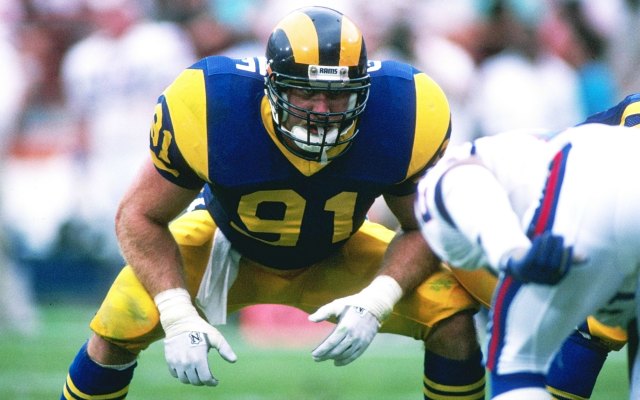
Throwback Player Profile #5 - Kevin Greene


The past few 'throwback player' features have included current or soon-to-be Pro Football Hall of Fame-ers. This week I'll be taking a look at someone who probably should be, but has fallen short over the last few years: Kevin Greene.

Accumulating 160 sacks (third all time) in a fourteen-year career, Greene is often dismissed on the grounds that he was a 'one trick pony'. Greene was never the most complete player, but if a coach had to pick one 'trick' for an 3-4 outside linebacker to excel at, pressuring the quarterback would likely be top of his list.

Kevin Greene excelled at sacking the quarterback the same way Cris Carter, Andre Reed, Terrell Owens and Marvin Harrison excelled at catching passes.

This tenacious ability to inflict pain on opposing quarterbacks manifested itself while he was at the University of Auburn. After some time in the National Guard, Greene attempted to forge himself a career in football as a walk-on player (he was not offered a scholarship to play college football). He introduced himself to his future coaches with a supremely confident declaration: "Hey, Coach, I'm Kevin Greene and I'm your starting outside linebacker". Greene quickly emerged as a force on defence - winning the Zeke Smith award in 1984 after only two seasons - and leading the SEC in sacks in his senior year with eleven.

Greene is known for being somewhat of a 'journeyman' player, and his first port of call was the Los Angeles Rams - who had drafted him in the fifth round of the 1985 NFL draft. He was immediately given a chance to play as the Rams ran a five-linebacker defence, and in his first two seasons as a regular he amassed 13.5 sacks. Despite the Rams' changing their defensive scheme from a 3-4 to a 4-3, Greene still managed to amass 72.5 sacks, including two consecutive seasons (1988 and 1989) with 16.5 sacks. 


With the advent of free agency, Greene went looking for teams that employed a more familiar 3-4 scheme, and found a new home in the form of Dom Capers' Pittsburgh Steelers defence. He flourished, and recorded 12.5 sacks in his first year with the team, 14 in his second season and in 1994 he was named a consensus All Pro. Alongside Greg Lloyd, Chad Brown and Levon Kirkland, Kevin Greene was an integral member of one of the greatest linebacking corps of all time, and the group are still favourably compared to the great Steelers' linebackers of the 1970's.
Greene hopped around from team to team for the last few years of his career, and this arguably counts against him when being considered for the Hall of Fame. A short stint (three seasons) in Pittsburgh preceded one season with the newly-formed Carolina Panthers and another with the San Francisco 49ers before returning to Carolina for the final two years of his career. A super bowl ring remained elusive, but over his last four seasons Greene amassed an incredible 52 sacks, was named the National Football League Players Association linebacker of the year and reached his fifth and final Pro Bowl in 1998.


It's strange that this should hinder his case for entry. Sure, most Hall of Fame players spent the majority of their careers within one organisation but, despite his nomadic existence, Greene was a model of remarkable consistency. He never experienced a decline in his production - he is still the oldest player to lead an NFL season in sacks with 14.5 in 1996 at the age of 34 - and is one of only three players in NFL history to record ten or more sacks in at least as many seasons.
Greene finished with 160 of them - third all time behind Hall of Famers Bruce Smith and Reggie White, and ahead of Chris Doleman, Michael Strahan, John Randle, Richard Dent and Lawrence Taylor. All of whom are, unsurprisingly, in the Hall of Fame. He also holds the record for most sacks by a linebacker (27.5 sacks ahead of Taylor).

Another argument for his omission is that he was a pure sack artist and not a complete defensive player. While he undoubtedly specialised in this area, it is not coincidence that defences featuring Greene as a prominent starter were also dominant run-stopping units. Between 1988 and 1990 (Greene's first three as a starter) teams averaged only 3.9 yards per rush against the Rams. In his time with the Steelers and 49ers, teams averaged 3.48 and 3.5 yards per rush, respectively, and Greene ended his career with a respectable 52 tackles for loss.


Kevin Greene's admission to the hall of fame is a matter of 'when' not 'if'. He has a super bowl ring as a coach (with the Packers) to boost his claim, but the past few classes have been stacked with elite defensive candidates - almost all of the players above and below Greene on the all-time sacks list were enshrined after Greene became eligible in 2005 - and future classes are set to feature Ray Lewis, Jason Taylor, Charles Haley and John Lynch.

Greene himself said: "The Hall of Fame voters, if they would look at my entire body of work, how I played, maybe they'll see fit to put me in... commitment, passion, study habits, workout habits... everything I did I think I did it the right way."

He might have to wait a while, but in a highlight reel-obsessed league voters simply cannot - and will not - ignore Greene due to his production.

Sunday, 24 November 2013

The Importance Of 'Plan B'


2013 has been The Year of the Backup Quarterback.

Today we will see Tom Brady vs. Peyton Manning - unquestionably the best rivalry in NFL history - for the fifteenth time, but the biggest quarterback-themed story this season has been about replacement quarterbacks.

The injury epidemic involving starting quarterbacks - particularly the one suffered by Aaron Rodgers - has stressed the importance of teams having a capable backup.


In the NFC North alone, three teams have had to replace their starters: in Chicago, Josh McCown stepped in following Jay Cutler's groin injury. In Green Bay, Seneca Wallace replaced Aaron Rodgers, and then Scott Tolzien was forced to step in for Wallace when he was injured. Minnesota saw both Matt Cassell and Josh Freeman replace Christian Ponder in the wake of Ponder's rib injury.

Seventeen NFL teams have turned to backups in the wake of injuries, and in many cases their on-field performance has been elevated after the arrival a new signal caller. The Philadelphia Eagles have a 4-1 record under Nick Foles, the Bears are 2-0 with Josh McCown at the helm and the Cleveland Browns went 3-0 after Brian Hoyer replaced Brandon Weeden as starter (before Hoyer himself went down injured). Matt McGloin also led the Oakland Raiders to a win in his first game as starter.

However there are many teams that have struggled in the wake of injuries to their multi-million dollar franchise-leading investment, and it's probably unfair to criticise any team that does so. Despite this, it is becoming abundantly clear that teams cannot afford to overlook their starting quarterback's potential replacement.


So what do what do teams look for in a backup quarterback? Looking beyond the obvious questions of talent and tangible factors, it is important to consider the intangibles. Recent trends suggest that well-run teams look to tick a number of boxes when trying to find a viable replacement.

Firstly, they first need to consider whether the quarterback fits their system and how familiar they are - or will be. It's no coincidence that Scott Tolzien (Wisconsin) and Case Keenum (Houston) have ended up playing for the Packers and Texans, respectively. Those teams will have seen them extensively at the collegiate level and know whether they can fit into their system. The same goes for players who have been called up from the practice squad to the main roster.

Tolzien wasn't with the Packers until after training camp, which brings up the question of how adaptable a quarterback is: are they intelligent enough to pick up the playbook quickly and make smart, safe decisions on the field? In many instances, physical talent might be overlooked in favour of someone who can manage a game efficiently.

Finally, character is a major deciding factor when it comes to picking a last-resort quarterback option - NFL teams frequently turn to players with unblemished disciplinary records and no character concerns (ever wondered why Vince Young can't land a job?). They look for players who are competitive - players who have gone to countless workouts and hopped from team to team in search of an opportunity. Being hungry is a sign that they will be well-prepared when they

This is, of course, not a concrete formula - but it is no coincidence that many successful backups (you can see some of the best here) conform to many of these criteria.


Wednesday, 6 November 2013

Photo Gallery: Replacement Quarterbacks


He might only be out for a few weeks, but there's no denying that Aaron Rodger's fractured collarbone was the story of an already-busy week 9. Naturally, there are questions over who Green Bay should turn to in his absence (*cough*VinceYoung*cough*) but replacement quarterbacks are nothing new in the NFL - here's five of the best:


Tom Brady:


Remember this guy? Famously replaced Drew Bledsoe when the latter decided to take off on an ill-fated scramble which ended up - after a hit from Jets linebacker Mo Lewis - with a sheared blood vessel and a stint in hospital. Brady was the next man up and turned out to be pretty (see: three-time Super Bowl champion) good. Interestingly, Bledsoe returned the favour, and replaced his replacement in the AFC championship game where he threw for 102 yards and a touchdown to seal the Patriots place in Super Bowl XXXVI.

Kurt Warner:


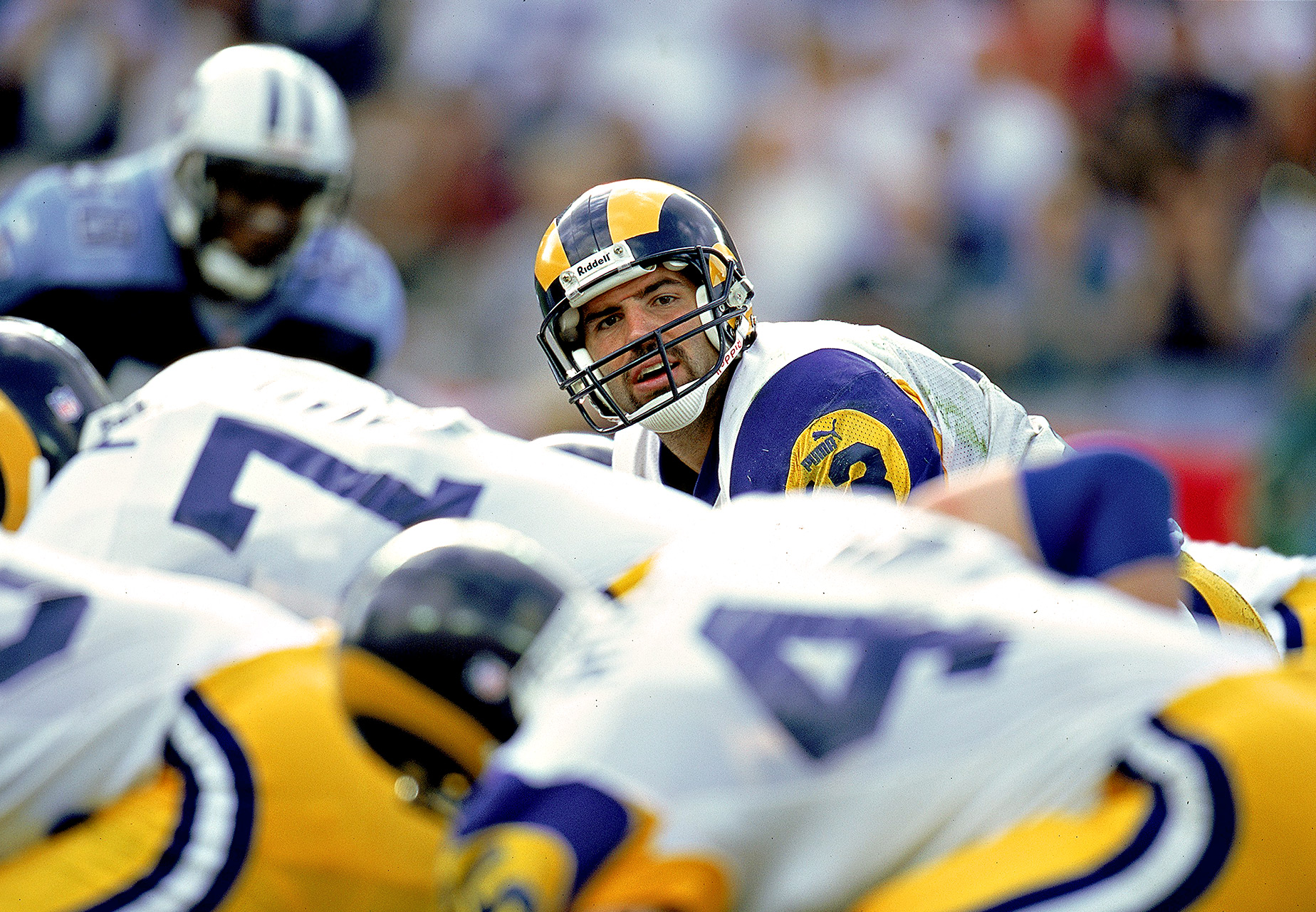
The Patriots' opponents in Super Bowl XXXVI were the St. Louis Rams - led by Kurt Warner. After Trent Green went down injured in the pre-season, the Rams turned to Warner - a Green Bay Packers reject, arena football quarterback and grocery store worker. Unexpectedly, Warner's arrival led to the creation of the "greatest show on turf", an NFL MVP performance in 1999, and a Super Bowl ring after beating the Tennessee Titans in Super Bowl XXXIV. He returned to the big game in 2009 with the Arizona Cardinals, becoming only the second quarterback in history to start two Super Bowls.

Steve Young:


The 1990 NFC Championship game is notable for being the end of the Joe Montana era in San Francisco. Although infinitely less obscure than the other guys on this list, longtime backup and former Tampa Bay Buccaneers quarterback Steve Young stepped in after a ferocious hit from New York Giants defensive end Leonard Marshall knocked Montana out of the game. Young became a perennial all-pro and pro bowl selection, league MVP in 1992 and 1994, and world champion when the 49ers beat the San Diego Chargers 49-26 in Super Bowl XXIX.

Jeff Hostetler:


If you had told anyone - prior to the 1990 NFL season - that the 49ers and Giants would meet in the NFC title game, they'd have all expected to see a duel between Joe Montana and Phil Simms. What they actually got was Steve Young vs. Jeff Hostetler.
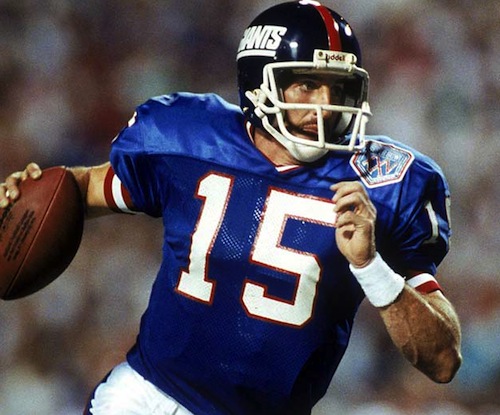
Hostetler had sat patiently behind Simms for six seasons before replacing him, winning the Giants' last two regular season games, leading them through the playoffs and winning Super Bowl XXV. The following years led to an open competition between the two quarterbacks, and ended with Hostetler moving to the Raiders, and Simms' retirement.

Tim Tebow:


Unlike the other members of this list, Tim Tebow is less notable for winning a Super Bowl, and more notable for the manner in which he took the reigns of the 2011 Denver Broncos.
Responding to immense fan pressure (including fan-commissioned billboards), Coach John Fox replaced a struggling Kyle Orton at halftime in a game against the San Diego Chargers. With Tebow under centre, the Broncos rallied from 15-0 down - Tebow threw and rushed for touchdowns - before losing in overtime.
What followed would be more of a cultural phenomenon  than a football career. Tebow, despite posting the lowest passing completion rating that season, rattled off a number of improbable wins culimating in a playoff victory over the Pittsburgh Steelers. Despite not doing anything to prompt it himself, the 'Tebowmania' seen during this season has been reason enough for most NFL teams to avoid him like the plague.

Honorable Mentions:

Doug Williams - Like Steve Young, Williams was a former Buccaneer and USFL quarterback, and took over from Jay Schroeder as the Redskins signal caller. He lost the remaining two games of the season but blazed through the playoffs, and became the first African-American to win a super bowl. No biggie.

Trent Dilfer - replaced Tony Banks (who?) during the Baltimore Ravens 2000 season. Breathed life into the Ravens offense while their defence took care of business. Defeated the Giants in Super Bowl XXXV.

Jake Delhomme - In Super Bowl XXXVI, 1999's Cinderella Story Kurt Warner faced 2001's Cinderella Story Tom Brady and lost. Two years later, the Patriots met the Carolina Panthers and Jake Delhomme *almost* did the same to Brady. Replacing Rodney Peete (who?), Delhomme led the Panthers to an 11-5 record.

Agree? Disagree? Let me know in the comments section or on Twitter: @TomMacFootball